Adityas & The Beginning of the Solar Year
The Puranas, which are one of the texts describing the Adityas, relate each Aditya and the Beings that travel with it to a Solar Month.
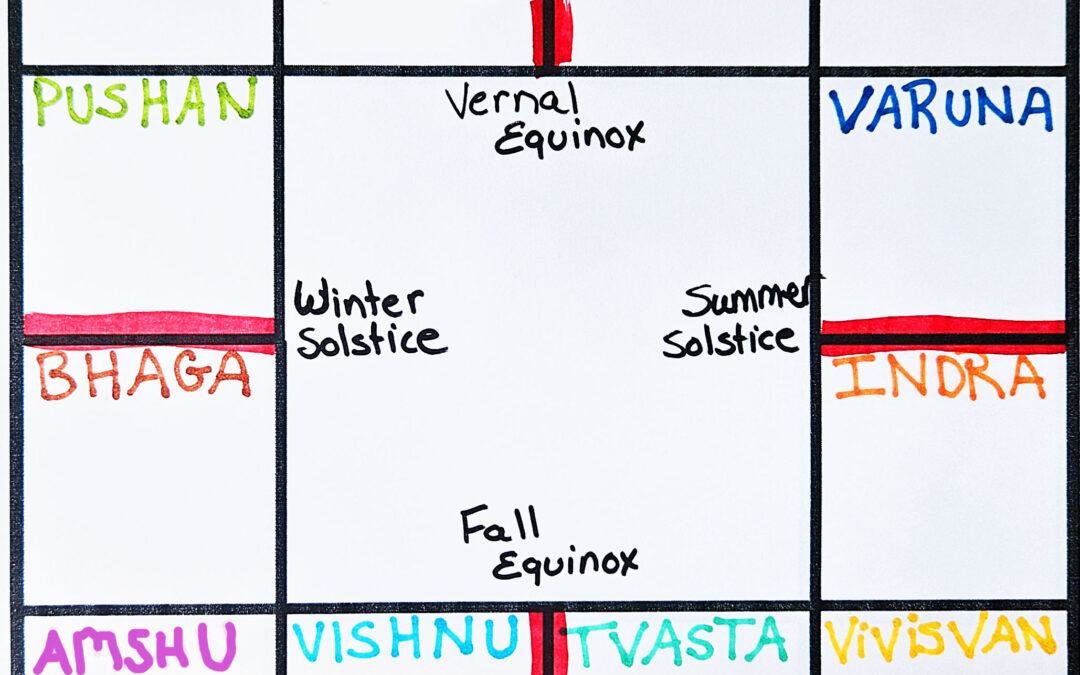
Vasant is the name of the Spring season in India. The first month of Spring is Madhu which begins 30 degrees before the vernal equinox and that relates to the Aditya of Dhata. Dhata is the first Aditya.
However, if we research online, we are told that the first month of Vasant or Spring is Chaitra. This is because Chaitra is the first LUNAR month and begins at the first new moon around the time of the vernal equinox. The use of Solar months has been forgotten but they were meant to be used aligned with the seasons and Adityas according to the Puranas and the Srimad Bhagavatam.
That may not look correct from what we are accustomed to seeing because with the Western Solar Months of Aries, Taurus, Gemini, etc., the first Solar month (Aries) begins at the vernal equinox. So, we may ask, why does the first Aditya begin at a different time?
The apparent mismatch with Western astrology arises because the ancient Solar Year began before the vernal equinox, aligned with the Lunar New Year, which is defined by the last Sun–Moon conjunction before the Solar Year.
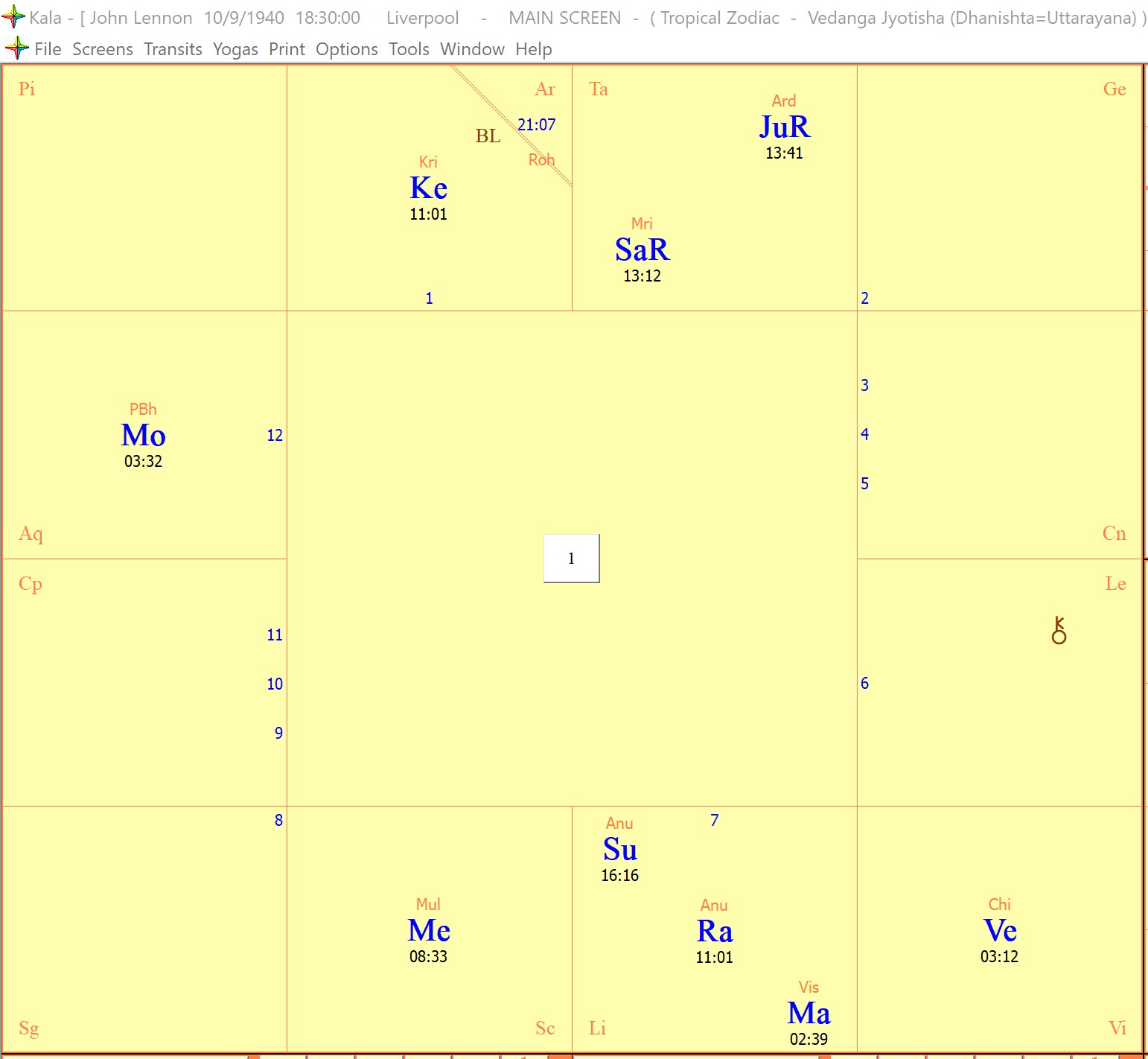
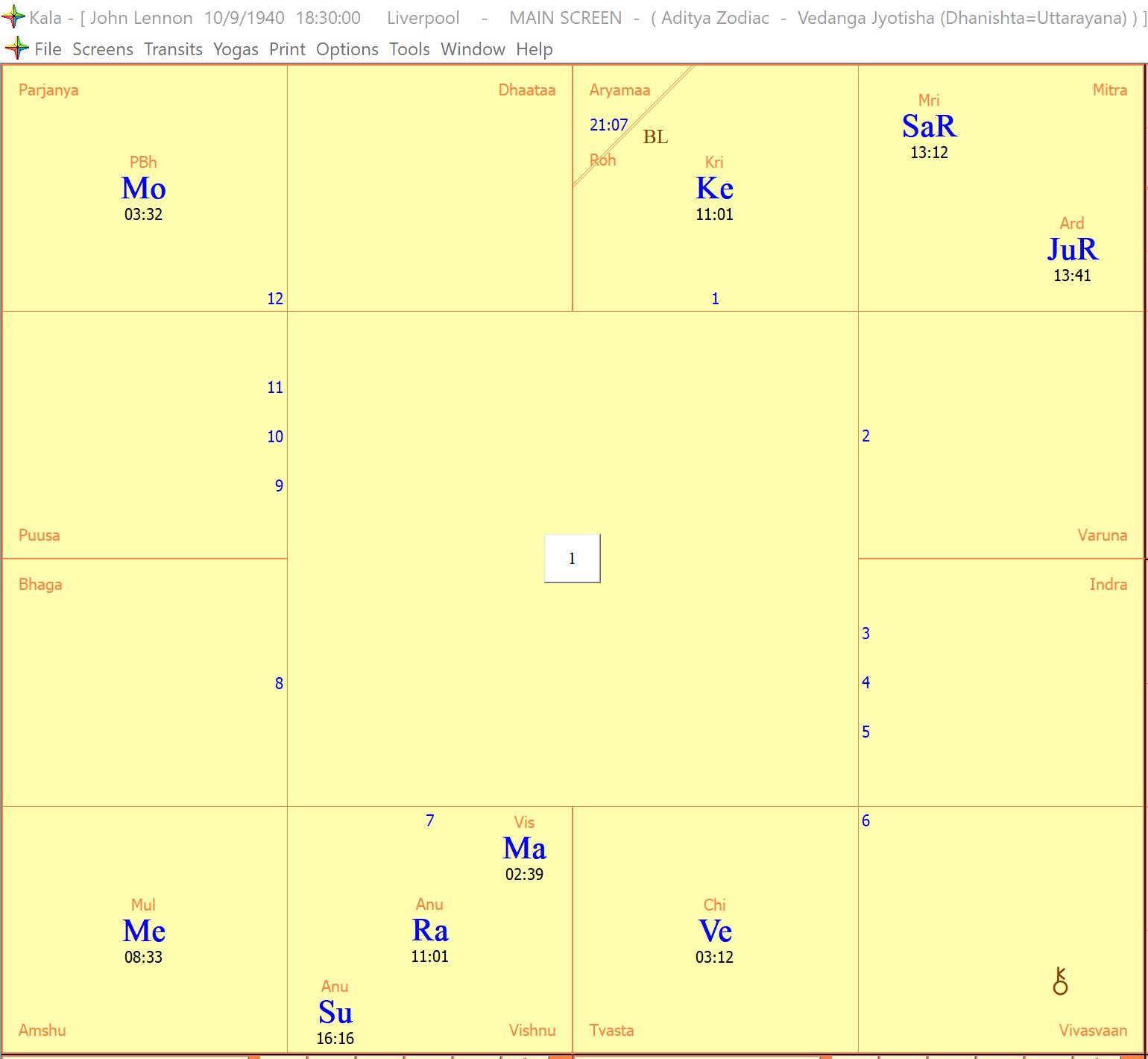
In the Birth Chart of John Lennon, we can see the difference between using the Tropical Zodiac with Western Signs on the left and the Adityas on the right. Everything appears to move forward 30 degrees.
What actually is happening is that the Solar Year is beginning a solar month BEFORE the vernal equinox which is shown above as the corresponding Aditya Dhata. In the chart on the left, the vernal equinox begins at the beginning of Aries and in the chart on the right, the vernal equinox has moved to the middle line, between Dhata and Aryama. The vernal equinox has NOT changed but the beginning of the Solar year has.
The Lunar New Year begins at the Sun-Moon conjunction before the Sun enters Tropical Pisces or when the Sun crosses the point 30 degrees before the Vernal Equinox. This is also known as the Chinese Lunar New Year and is the correct starting point of Spring.
The calendar for the beginning of the Solar Year changed and moved to the vernal equinox. The equinox became the first point at the beginning of the year whereas the first month of the year falls before that. In the Puranas, this is made extremely clear. Vasant, which is the Spring Season, is defined as the months before and after the vernal equinox and the first month of Vasant, Madhu, belongs to the Dhata Aditya.
The Puranas are clear that Dhata Aditya begins at the point of 30 degrees before the vernal equinox and that Dhata is the first Aditya. Some will relate Dhata to Tropical Aries. That is not correct. Dhata does not occupy the same space on the Ecliptic as Tropical Aries or Sidereal Aries. Dhata correlates to Tropical Pisces. Tropical Signs can be correlated to Adityas but not in the commonly understood way. The meanings of Adityas should never be mixed with meanings of Western Tropical Signs.
Translation Errors & Loss of Solar Months
Before 300 BCE, Aries, Taurus, Gemini, etc. are not mentioned in Indian texts. Most scholars believe that Aries, Taurus, Gemini etc., have been added to texts like Srimad Bhagavatam for explaining the life of Krishna and for explaining the life Rama in the Ramayana. In other books of the same time period, Aries, Taurus, Gemini, etc., are not named.
Vedanga Jyotisha, which is the oldest astronomy book, dated around 900 BCE, does not use Aries, Taurus, Gemini, etc. Vedanga Jyotisha uses Tropical Nakshatras starting at Dhanishta Nakshatra, on the winter solstice, which puts Krittika Nakshatra 3 degrees 20 minutes past the vernal equinox. The astronomical points and methods described in the oldest astrological texts from India have no resemblance to how astronomical points are measured currently.
The Solar months of Madhu, Madhava, Sukra, Suchi and so on have fallen completely out of use in India. Instead, the first Aditya is assigned the month of Chaitra which is the first Lunar month, essentially relating Lunar Months to Adityas which is not correct.
If Sidereal is used, Adityas are no longer correlated to the equinox points. The translators of the Puranas replaced the Sanskrit of the first Solar month of Madhu with the first Lunar month of Chaitra. They replaced the second Solar month Madhava with the second Lunar month and so on. It is essential to understand Sanskrit when reading the Puranas because the translators translated in a way that was relatable for the audience. Even though it is clear in the Puranas where to begin the Adityas.
The meanings of the Adityas have nothing to do with seasons or solar months but they are calculated in reference to those known phenomena.
Vargas aka Harmonic Charts
Are Adityas used in Vargas aka Harmonic Charts? Interestingly, Parasara does not mention Signs in Vargas. He gives Planetary Lords and those are based on Signs, but he mentions this in the Navamsa only, then gives Deities for each of the Navamsas.
The same way we have Adityas as deities based on the Rasi Chart, we have deities for all the Vargas. These Varga deities have, for the most part, been neglected and ignored by astrologers. Every Varga also has a planetary lord. The planets are still manifesting the same fruits in the vargas but now there is a new symbol attached to what is happening.
Stay tuned for the descriptions of each Aditya and their entourage in the coming days which provide rich symbolism to add to our astrological knowledge.
Copyright © 2026
laurabaratastrologer.com | ALL RIGHTS RESERVED